

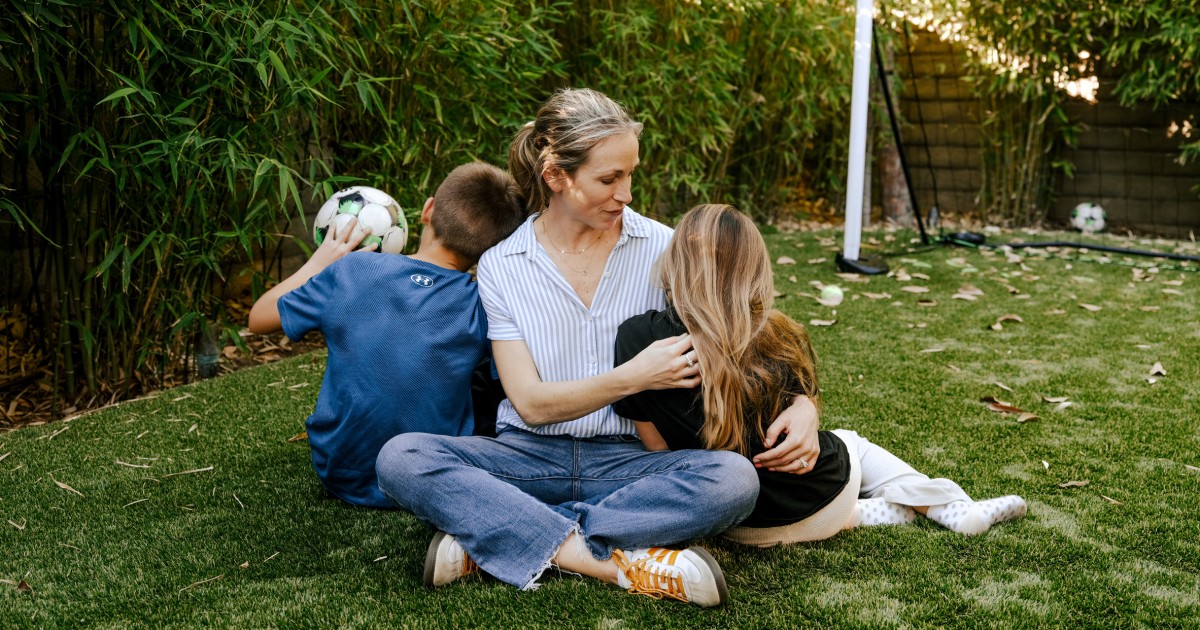
The middle schooler had been begging to opt out, citing headaches from the Chromebook screen and a dislike of the AI chatbot recently integrated into it.
Parents across the country are taking steps to stop their children from using school-issued Chromebooks and iPads, citing concerns about distractions and access to inappropriate content that they fear hampers their kids’ education.
Computers have nothing to do with it. It’s everything to do with curriculum requirements and the lack of explorative reading thanks to standardized testing. Other countries like China, Taiwan, and Finland have been able to adopt technology with no loss in reading literacy. It’s because they have focused, thought out integration and not just slapdash by whatever corporation gives them the best deal.
I totally agree though. It seems like right now either kids are stuck in front of a computer with no prep or any other supplemental education, or they’re completely unplugged and unprepared for interacting with technology outside of an iPhone.
I have a few family members that are teachers or work in education at some capacity and would absolutely agree the curriculum requirements and standardized testing have become a barrier. Though I am not an expert in education I was a student and can attest to the fact that these things stand in the way of educators being able to reach all students. These education programs are not designed to reach students that learn differently from the vast majority of students. When it comes to reducing exposure to technology in schools it would be foolhardy to double down on either direction. Technology and literacy should coincide and neither should replace the other. A little bit of moderation and balance goes a long way. Today’s society and politics focus on a nose to the grindstone, devil may care rate of progress which though fast and traditionally the American way is unfortunately full of holes and mistakes that are only noticed in hindsight.
Absolutely. My spouse is a teacher and I have many friends who are, too. I see it every day. The “good” teachers use technology to the benefit of themselves and the students, using it when appropriate and when best applicable. No doubt there are teachers and students out there who use it as a crutch. Like you said though, we need to be able to switch between analog and digital, figuring out when either is better suited.
I play RPGs. I do all of my characters and planning and stuff with pencil and paper. I do a lot of my GM work digitally. You need to be able to do both today, or else you’re not going to be prepared for adulthood.
The Pineapple And The Hare: Can You Answer Two Bizarre State Exam Questions?
spoiler
In the olden times, animals could speak English, just like you and me. There was a lovely enchanted forest that flourished with a bunch of these magical animals. One day, a hare was relaxing by a tree. All of a sudden, he noticed a pineapple sitting near him.
The hare, being magical and all, told the pineapple, “Um, hi.” The pineapple could speak English too.
“I challenge you to a race! Whoever makes it across the forest and back first wins a ninja! And a lifetime’s supply of toothpaste!” The hare looked at the pineapple strangely, but agreed to the race.
The next day, the competition was coming into play. All the animals in the forest (but not the pineapples, for pineapples are immobile) arranged a finish/start line in between two trees. The coyote placed the pineapple in front of the starting line, and the hare was on his way.
Everyone on the sidelines was bustling about and chatting about the obvious prediction that the hare was going to claim the victory (and the ninja and the toothpaste). Suddenly, the crow had a revolutionary realization.
“AAAAIEEH! Friends! I have an idea to share! The pineapple has not challenged our good companion, the hare, to just a simple race! Surely the pineapple must know that he CANNOT MOVE! He obviously has a trick up his sleeve!” exclaimed the crow.
The moose spoke up.
“Pineapples don’t have sleeves.”
“You fool! You know what I mean! I think that the pineapple knows we’re cheering for the hare, so he is planning to pull a trick on us, so we look foolish when he wins! Let’s sink the pineapple’s intentions, and let’s cheer for the stupid fruit!” the crow passionately proclaimed. The other animals cheered, and started chanting, “FOIL THE PLAN! FOIL THE PLAN! FOIL THE PLAN!”
A few minutes later, the hare arrived. He got into place next to the pineapple, who sat there contently. The monkey blew the tree-bark whistle, and the race began! The hare took off, sprinting through the forest, and the pineapple … It sat there.
The animals glanced at each other blankly, and then started to realize how dumb they were. The pineapple did not have a trick up its sleeve. It wanted an honest race — but it knew it couldn’t walk (let alone run)!
About a few hours later, the hare came into sight again. It flew right across the finish line, still as fast as it was when it first took off. The hare had won, but the pineapple still sat at his starting point, and had not even budged. The animals ate the pineapple.
That story feels like someone was enraged by ‘The Tortoise and the Hare’ while writing it.
This is from 2012. You can’t even pin this on LLM hallucinations.
Without reading the article(and therefore knowing the desired answer):
No one actually explained why they ate the pineapple. I would say that they wouldn’t have eaten the pineapple due to their amusement, but “annoyed” can be inferred, “hungry” is possible since it’s been a few hours, and “they wanted to” is fine.
As for wisdom, I would argue that the owl(“the” implying that the owl is real, in my interpretation, because I want it to mean that) is the wisest for not having attended this foolish event which wasted everyone else’s time. The hare raced a fruit, the crow had a decent idea but was foolish to claim it so decisively, and the moose couldn’t understand the intention behind a common saying. Of course, the question is about who is the most wise, not about who is wise, so foregoing the owl idea it’s a whole other thing.
Just gotta read the article now and figure out if I’m supposed to be dumb for even trying or whatever lol
This is why I look sideways at the “Americans only read at a 6th grade level” statistics. Because technically speaking you should be able to derive this answer from the content of the story without having it explicitly laid out. Only, the standardized question adds so much incoherent fluff to the narrative as to make deriving the answer ambiguous at best.
This still feels like a trick answer, because “owls are wise” is a cultural trope not included in the story itself in any meaningful way.
You could argue the crow is the wisest for discerning the possibility of a trick. And then you could argue that wisdom is not synonymous with correctness to justify why the crow was savvy but still wrong.
You might argue that the moose is the wisest, because it was able to identify the moral of the story in advance.
You might argue the hare is the wisest, because it knew it could win a race against a pineapple.
But all of this would need to be laid out in an actual fully-written argument. It’s not the sort of answer you can pick out of a multiple choice exam. It’s the a debate you can have between peers where the analysis of the work is more valuable than the final selection.
The story is highlighted precisely because it is nebulous and confusing. I suspect the authors of the question intended it to create the illusion of a weed out question by guaranteeing a low success rate at selecting the answer.
But you could achieve the same results by asking “What side will a coin land on if I flip it?” a. Heads, b. Tails, c. The Edge, d. The Coin will not land
Since there’s no explicitly correct answer, you are - at best - going to get a roughly even distribution of answers between a. and b. Then you get to report up to your bosses that you’re filtering out a certain number of students as “failures” without interrogating why they failed or what you’re even testing them to do.
Yea, after read the original story shown in the article there was certainly better writing. Like the moral that you shouldn’t back someone just because you think they must be smarter than to challenge a runner to a foot race while having nary a leg in sight. Oh, and I went right by, on purpose, the wise owl trope. But yes, it’s likely there as an answer for that reason.
The whole situation’s a mess. I often get in trouble, even at 30 years old, for “asking too many questions” or wanting more detail. Even in French class yesterday the teacher was asking us to form opinions on headlines and I was arguing because I cannot form an opinion based on a headline. I understand the exercise was a language one, but it still matters.