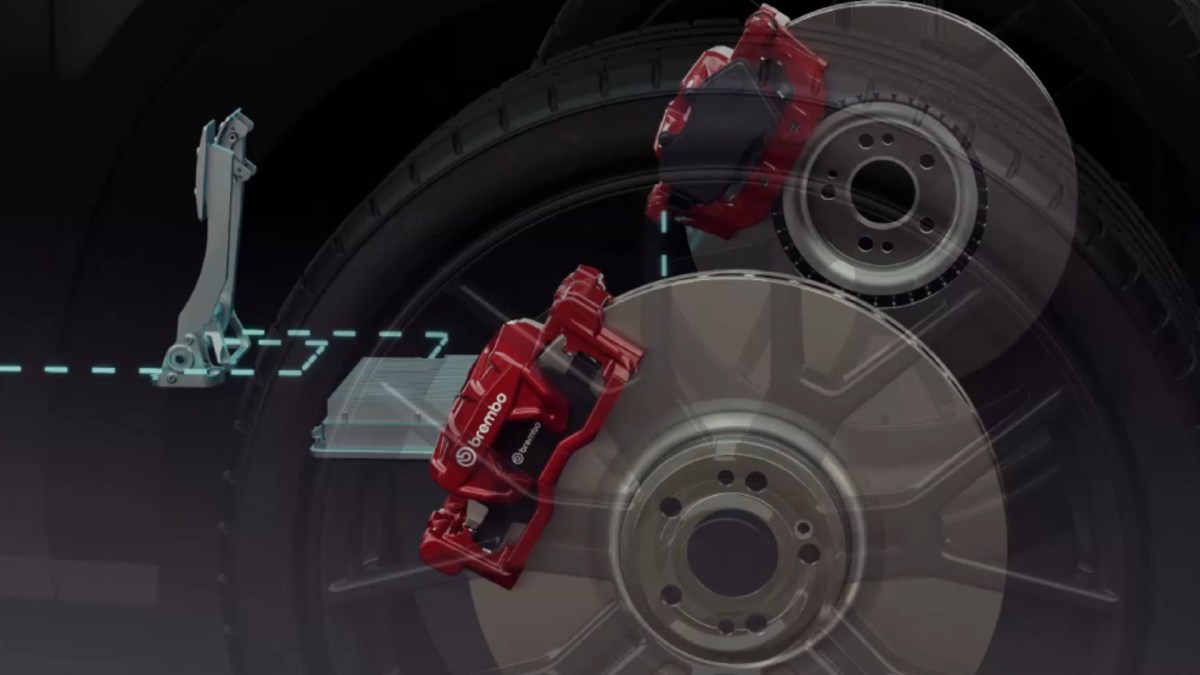
Brembo’s new “Sensify” braking system takes that one step further, eliminating the hydraulic system entirely and relying instead purely on electronic brake-by-wire and electric motors
OK now show us a scenario where the vehicle is badly damaged in a traffic collision, the electrical system is compromised, (possibly even on fire) and show me the vehicle slowing to a stop safely with no electrical systems functioning what-so-ever or GET OUT OF HERE WITH THIS INSANITY
Luckily I discovered that using the cable brake on the cars I drove made them uncontrollable before I got into an emergency. I ruled that out once I did a full 360 at 5 mph on a regular road,
I learned to emergency stop on the transmission. Slow down on the gears and eventually fuck it up dropping it into park
So, yeah, pulling the e-brake hard on the highway can be… exciting, which is generally not what you want in an emergency situation.
This was more of a case of: welp, I’m 10 miles from home and I have a choice: pull over and arrange for a tow truck, or proceed with all due caution on the safest possible routes and get it home without wasting many hours of my time and hundreds of my dollars on the tow.
Now, when the fuel line got chewed by squirrels and a gasoline spray-fountain was emerging from the wheel well… yeah, towtruck time. But bad brakes? Depends on the situation, many situations can be safely handled with the “performance level” you get from cable brakes on the rear wheels.
Oh, one tip should you ever try using the parking brake to stop while rolling: make sure you know how to release it and keep the ability to release it engaged whenever applying the brakes while moving. If you let it latch up, you’re gonna be a passenger not a driver.
‘Classic’ cars can be heavy enough to boil brake fluid in heavy breaking situations. Once the fluid boils you lose all breaking power at once on all 4 wheels.
Can also boil break fluid if a wheel bearing fails while driving( repair shop packed it too tight)
Also the magic stop juice comes out if you panic stomp on the breaks while headed down an icy hill.
Hydraulics can and do fail over time, and in my experience - the more that people fool around with them (change fluid unnecessarily, etc.) the faster they develop real problems. Brake fluid dripped on the outside of steel lines and not cleaned off can cause the lines to rust through and fail in under a year. Nevermind that stainless steel lines that wouldn’t have this problem only cost $10 more per set to manufacture and install, of course the manufacturers use plain steel instead to save the $10.
The other requires you to push the brake pedal, have electrical power, and a working motor.
As soon as you start talking about system safety, this shit is orders of magnitude more likely to fail and result in traffic fatalities, and for what benefit?
It’s all about system design. Hydraulic breaks are a known quantity with a long development time .
Modern cars already physically separate drivers from the transmission and steering. Steering is drive by wire and transmissions are computer controlled , I can suggest a gear with a button or paddle.
Breaks are the next function to be moved from hydraulic to electric systems.
If it is implemented as well as steer by wire it should be safe as the current technology.
I’m with you, but playing devil’s advocate… A hydraulic brake line can be damaged in an accident as well. Simple brakes with a proportioning valve or similar mechanism likey doubles your redundancy for most failures of downstream brake components but that’s not guaranteed.
It does say electric motors are a part of the system which could be like the electronic parking brakes in many modern cars. Maybe they default to a closed/braking condition if power is lost?
I will not be the one risking my life or my family’s life or the lives of other families to be an early adopter of this tech, but it could work with rigorous engineering and testing.
Oh I’m with you there, but hydraulic hard lines and high pressure brake lines are thousands of times more rugged than electrical wires and cannot be rendered useless by software mistakes or operating system crashes.
The ABS controller, computer functions of a regular car can fail catastrophically, the vacuum system can be breached and made useless, but the hydraulic brake pedal is still capable of slowing a car to a stop.
Yeah! F1 cars and airplanes do it! Y’know, those vehicles that have certified mechanics double checking and repairing the systems literally every time they get used.
I’m not saying brake by wire is unreliable, but that’s just about the worst example you could give for reliability.
Fail secure sounds good but now you also need to consider how quickly the brakes engage. Don’t want some random electrical hiccup locking up your brakes mid curve while you’re three-wide doing 70 on an interstate. Slowly draining capacitors or whatever to gradually engage them might be an option. Then you also, preferably, need some means of physically disengaging them. Otherwise you’re gonna get disabled vehicles in the middle of roadways that have to be dragged up onto flatbeds or the side of the road because the wheels won’t roll without restoring brake power first.
I am an engineer, and yeah there’s no way it fails to no brake. Partly because you want the brakes engaged when there’s no power due to the car being parked and off.
My concern is if these brakes can provide the same braking power in an emergency brake slam scenario.


OK now show us a scenario where the vehicle is badly damaged in a traffic collision, the electrical system is compromised, (possibly even on fire) and show me the vehicle slowing to a stop safely with no electrical systems functioning what-so-ever or GET OUT OF HERE WITH THIS INSANITY
Maybe learn how things work before going on a rant. The default no power state of this system is full braking.
Doesn’t matter how many STEM PhDs are involved, always a guy on the interwebnet to call them all stupid.
Okay. The electrical system shuts down at highway speeds and you go full brake while in traffic on a wet day. Nice.
There’s no right answer that saves all lives in every scenario but there’s a really good reason hydraulics have been used for so long.
I have had hydraulic brakes fail more than while driving. They can fail even when the lines are fully intact.
I have driven home more than once using the cable brake backup after a hydraulic failure.
I also have owned vehicles where the heat-based pads and rotors system overheated and severely lost braking ability after a single stop from 70mph.
Luckily I discovered that using the cable brake on the cars I drove made them uncontrollable before I got into an emergency. I ruled that out once I did a full 360 at 5 mph on a regular road,
I learned to emergency stop on the transmission. Slow down on the gears and eventually fuck it up dropping it into park
So, yeah, pulling the e-brake hard on the highway can be… exciting, which is generally not what you want in an emergency situation.
This was more of a case of: welp, I’m 10 miles from home and I have a choice: pull over and arrange for a tow truck, or proceed with all due caution on the safest possible routes and get it home without wasting many hours of my time and hundreds of my dollars on the tow.
Now, when the fuel line got chewed by squirrels and a gasoline spray-fountain was emerging from the wheel well… yeah, towtruck time. But bad brakes? Depends on the situation, many situations can be safely handled with the “performance level” you get from cable brakes on the rear wheels.
Oh, one tip should you ever try using the parking brake to stop while rolling: make sure you know how to release it and keep the ability to release it engaged whenever applying the brakes while moving. If you let it latch up, you’re gonna be a passenger not a driver.
That sounds more like a lack of maintenance in my experience, but I wouldn’t want to be where you were sitting when that happened.
‘Classic’ cars can be heavy enough to boil brake fluid in heavy breaking situations. Once the fluid boils you lose all breaking power at once on all 4 wheels.
Can also boil break fluid if a wheel bearing fails while driving( repair shop packed it too tight)
Also the magic stop juice comes out if you panic stomp on the breaks while headed down an icy hill.
Hydraulics can and do fail over time, and in my experience - the more that people fool around with them (change fluid unnecessarily, etc.) the faster they develop real problems. Brake fluid dripped on the outside of steel lines and not cleaned off can cause the lines to rust through and fail in under a year. Nevermind that stainless steel lines that wouldn’t have this problem only cost $10 more per set to manufacture and install, of course the manufacturers use plain steel instead to save the $10.
One system requires you to push the brake pedal.
The other requires you to push the brake pedal, have electrical power, and a working motor.
As soon as you start talking about system safety, this shit is orders of magnitude more likely to fail and result in traffic fatalities, and for what benefit?
It’s all about system design. Hydraulic breaks are a known quantity with a long development time .
Modern cars already physically separate drivers from the transmission and steering. Steering is drive by wire and transmissions are computer controlled , I can suggest a gear with a button or paddle.
Breaks are the next function to be moved from hydraulic to electric systems.
If it is implemented as well as steer by wire it should be safe as the current technology.
You could say the exact same for steering by wire.
Breaking by wire along with a gyro can help keep a car stable when breaking in slippery conditions in addition to ABS.
Does not mean it will be done, but it becomes possible.
At the very least, come up with a engineering sounding name.
“Sensify” sounds like an app subscription I need to install on my car that uses AI to initiate predictive braking based on my driving habits.
Sensify sounds like a personal pleasure aide cream to me…
The car industry: “That’s a good idea!”
That’s the next article
Just keep an anchor and chain handy, throw it overboard when you need to stop.
Haha
I’m with you, but playing devil’s advocate… A hydraulic brake line can be damaged in an accident as well. Simple brakes with a proportioning valve or similar mechanism likey doubles your redundancy for most failures of downstream brake components but that’s not guaranteed.
It does say electric motors are a part of the system which could be like the electronic parking brakes in many modern cars. Maybe they default to a closed/braking condition if power is lost?
I will not be the one risking my life or my family’s life or the lives of other families to be an early adopter of this tech, but it could work with rigorous engineering and testing.
Oh I’m with you there, but hydraulic hard lines and high pressure brake lines are thousands of times more rugged than electrical wires and cannot be rendered useless by software mistakes or operating system crashes. The ABS controller, computer functions of a regular car can fail catastrophically, the vacuum system can be breached and made useless, but the hydraulic brake pedal is still capable of slowing a car to a stop.
Depends 200% on how they (both) are designed, manufactured and installed.
Now do brake seal failure or brake line rupture.
Sorry dude, brake by wire is 25 years old, it’s found on every plane and F1 car and on road cars since 1999. They system is better and more reliable.
Yeah! F1 cars and airplanes do it! Y’know, those vehicles that have certified mechanics double checking and repairing the systems literally every time they get used.
I’m not saying brake by wire is unreliable, but that’s just about the worst example you could give for reliability.
and don’t tell him cars have had brake by wire systems since 2002.
IANAE, so just spitballing, but… passive braking? Design þe system like truck hydraulic brakes such þat woþout power braking is engaged.
Fail secure sounds good but now you also need to consider how quickly the brakes engage. Don’t want some random electrical hiccup locking up your brakes mid curve while you’re three-wide doing 70 on an interstate. Slowly draining capacitors or whatever to gradually engage them might be an option. Then you also, preferably, need some means of physically disengaging them. Otherwise you’re gonna get disabled vehicles in the middle of roadways that have to be dragged up onto flatbeds or the side of the road because the wheels won’t roll without restoring brake power first.
Brake by wire in road cars is 25 years old. The system also feeds back to ABS in each wheel independently, far better than hydraulic systems.
I am an engineer, and yeah there’s no way it fails to no brake. Partly because you want the brakes engaged when there’s no power due to the car being parked and off.
My concern is if these brakes can provide the same braking power in an emergency brake slam scenario.
https://yasa.com/
Axial hub rotor motors can provide a transient -700hp of braking. Per wheel. This far exceeds rubber capabilities.