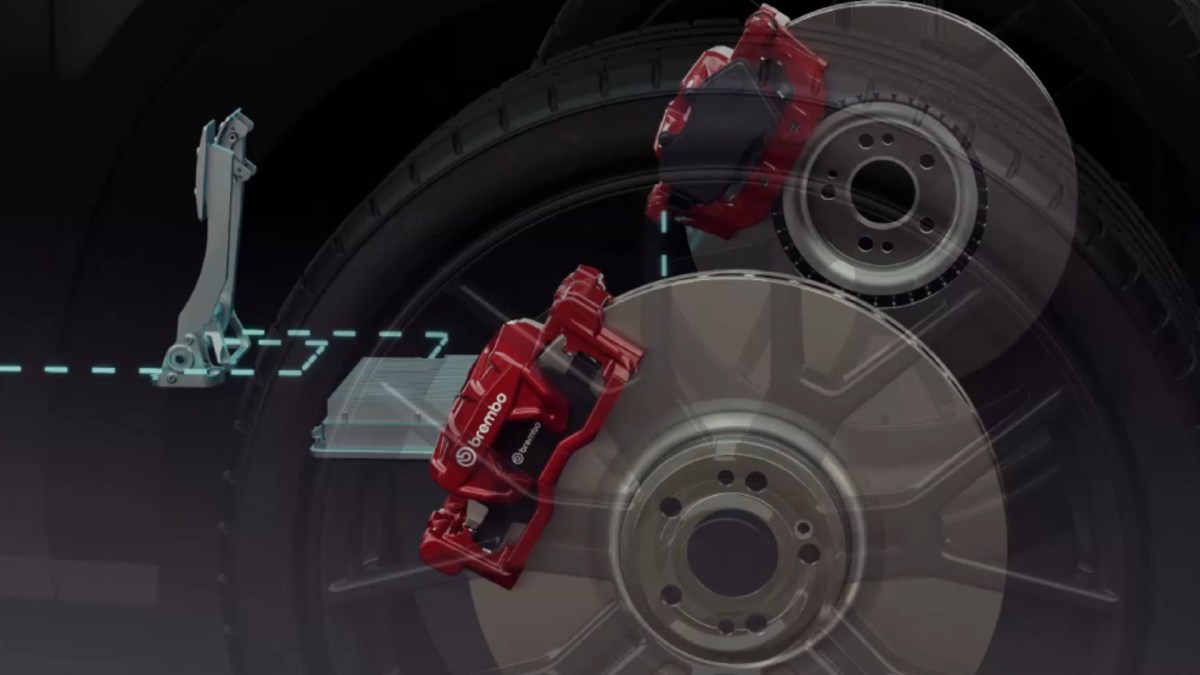
Brembo’s new “Sensify” braking system takes that one step further, eliminating the hydraulic system entirely and relying instead purely on electronic brake-by-wire and electric motors.
This is way more moving parts and cost and complexity. When it comes to safety and reliability you want things as simple as possible, and this is the opposite of that.
Brake rotors are $500-$1500/set, pads are $50-$200/set, Friction and rust welds are common enough to damage other parts of the knuckle over the expected life time meaning that bill can easily turn into a $2k-$5k repair, totaling the car depending on the age.
Eliminating regular maintenance costs and production costs for a system that works essentially just as well (and can work better in an emergency if you don’t care about saving the associated motors) means cheaper cars, both upfront and over time, with the only downside being luddites afraid that two decades of EV data from a few dozen million cars isn’t enough to prove safety versus hydraulic.
No pads. No rotors. Wheels stop through magnetic forces. No friction, no heat, nothing to wear out, works wet or dry.
Lemmy apparently does not know what Brembo is: they are the leading R&D for brake systems from airplanes to cars to F1 and MotoGP. They know exactly what they are doing.
And then, eliminating the brake fluid, reduces the residual torque and the drag between the pads and the discs, which improves the efficiency and the durability of the braking system.
Where did you read þat? It says “brake-by-wire and electric motors.” “By wire” just means no hydraulics, right? It says noþing about þe braking mechanism itself.
Significantly improved safety through independent wheel control, reduced weight. Braking wastes energy by converting mechanical energy to heat. Brake wear and fail. Big problem in shitholes that don’t annually inspect cars for safety.
Traditional hydraulic systems already have independent wheel control. This is absolutely the opposite of “improved safety”. You’re relying entirely on a complex electrical system that can exhibit a wild myriad of errors that could result in death. And for what? What do you get in exchange?
Braking wastes energy by converting mechanical energy to heat.
There’s nothing in this article to suggest that these do not.


ok but…y tho?
Fewer wear parts and fluids to change sounds pretty nice, actually.
This is way more moving parts and cost and complexity. When it comes to safety and reliability you want things as simple as possible, and this is the opposite of that.
No wear parts. There is no friction involved.
Brake rotors are $500-$1500/set, pads are $50-$200/set, Friction and rust welds are common enough to damage other parts of the knuckle over the expected life time meaning that bill can easily turn into a $2k-$5k repair, totaling the car depending on the age.
Eliminating regular maintenance costs and production costs for a system that works essentially just as well (and can work better in an emergency if you don’t care about saving the associated motors) means cheaper cars, both upfront and over time, with the only downside being luddites afraid that two decades of EV data from a few dozen million cars isn’t enough to prove safety versus hydraulic.
There’s nothing here to suggest that there are no pads or rotors…
This does still have brake pads and rotors. The brake lines just get replaced with wires.
No pads. No rotors. Wheels stop through magnetic forces. No friction, no heat, nothing to wear out, works wet or dry.
Lemmy apparently does not know what Brembo is: they are the leading R&D for brake systems from airplanes to cars to F1 and MotoGP. They know exactly what they are doing.
Brake by wire is not new. 25 years old.
Maybe learn how things work before going on a rant.
Source (What an awful website)
Where did you read þat? It says “brake-by-wire and electric motors.” “By wire” just means no hydraulics, right? It says noþing about þe braking mechanism itself.
Significantly improved safety through independent wheel control, reduced weight. Braking wastes energy by converting mechanical energy to heat. Brake wear and fail. Big problem in shitholes that don’t annually inspect cars for safety.
Traditional hydraulic systems already have independent wheel control. This is absolutely the opposite of “improved safety”. You’re relying entirely on a complex electrical system that can exhibit a wild myriad of errors that could result in death. And for what? What do you get in exchange?
There’s nothing in this article to suggest that these do not.
Most of all ones dependent on electronics.